
Suite x Privy: Why Email Becomes the Door to Web3 CRM
We’re excited to announce our integration with Privy, an email wallet infrastructure provider, to bring the best of Web2 familiarity and Web3 innovation together.

In the changing world of technology, one thing hasn’t changed: people still rely on email as the universal and enduring form of online identity. Unlike usernames tied to a single platform, your email is yours. You can take it anywhere, use it across providers, and no one can revoke your access.
That’s why we’re excited to announce our integration with Privy, an email wallet infrastructure provider, to bring the best of Web2 familiarity and Web3 innovation together.

Email: The Most Self-Owned Digital Identity
Email is one of the most resilient and widely adopted forms of digital identity. As Chris Dixon notes in Read Write Own (2024), unlike accounts locked into corporate platforms like Facebook or X, an email address is portable and interoperable across providers. For instance, if a platform like X or Facebook bans you, you lose access to all the connections you’ve built there. But with email, your network remains intact, meaning you can still reach people directly, no matter which service provider you use.
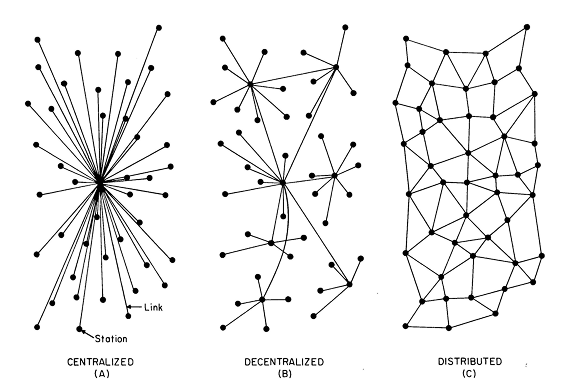
This is possible because email is built on open protocols (SMTP for sending, IMAP/POP3 for receiving). These shared rules make email universally compatible across services, allowing users to switch providers or applications while retaining their digital identity and contact network.
For businesses, this openness provides three major advantages:
Scalability: email enables broad, low-cost communication with customers.
ROI: it remains one of the most effective digital marketing channels.
Independence: businesses are not subject to platform-specific restrictions or bans.
From a user perspective, email provides familiarity. As Web3 grows, lowering adoption barriers with a trusted, widely used identity system is key to improving the onboarding experience.
How We Use Privy to Bridge Web2 and Web3
Our integration with Privy allows us to extend the utility of email into the Web3 ecosystem. Specifically, we are focusing on three key areas:
Seamless Onboarding with Email Wallets
Privy’s embedded wallet infrastructure enables developers to create accounts on Suite and manage their organization profiles using only an email address. This reduces friction for new users and allows businesses to begin managing customer data without requiring advanced Web3 knowledge.
Unified User Profiles
Through Privy’s API (App ID and App Secret), developers can import their existing users directly into Suite. This creates a combined profile that integrates both the offchain identifier (email) and the user’s onchain address. Suite’s AI then analyzes these datasets to deliver a more complete understanding of customer personas.
Future Capabilities: Onchain Activity with Email Outreach
We are developing functionality that allows DApps to track users’ latest onchain actions and engage them directly through email. For example, if a user recently bridged assets or purchased an NFT, the builder could send a relevant follow-up message or offer. This enables more timely and contextual engagement than is currently possible.
Conclusion
Email is the most universal digital identity in use today, and it is not going away. By combining Privy’s email wallet infrastructure with Suite’s engine, we are extending this familiar tool into Web3 — giving businesses the ability to connect with users more effectively and build relationships that span both digital worlds.
This integration is a step toward a more seamless Web3 CRM, where businesses can confidently onboard, understand, and support their communities with tools that feel familiar yet deliver new capabilities.
👉 To explore the technical details, check out our Suite x Privy Integration Guide.
👉 To learn more or discuss how Suite can support your project, reach out to our team via our official channels.
About Suite
Suite is an AI-powered Customer Success engine that helps Web3 projects understand and engage users through onchain insights.
Info Deck I X l Github l Integration Guide
Further Readings
Dixon, Chris. Read Write Own: Building the Next Era of the Internet. 2024.
Baran, Paul. On Distributed Communications: I. Introduction to Distributed Communications Networks. 1964. Link
Decentralized Social Networks. Medium, 2018. Link
ByteMonk. Mastering Email System Design: SMTP, IMAP, POP3, and Beyond. Youtube, 2025. Link
Campaign Monitor. The New Rules of Email Marketing. 2024. Link
Privy. Embedded Wallets for Apps. 2025. Link